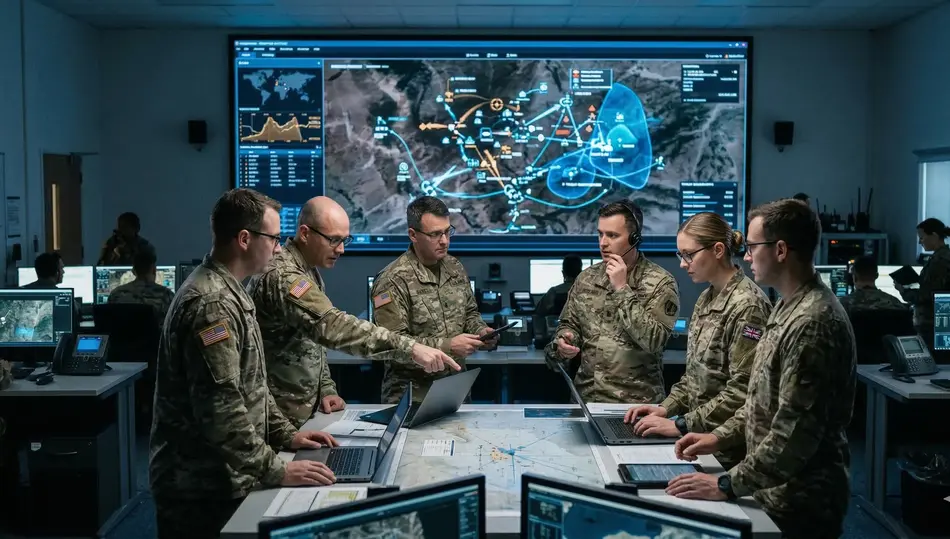
Palantir CEO Alex Karp said the company’s technology is being used in the Middle East conflict and argued that AI-enabled coordination is now a decisive strategic advantage for the U.S. and allied partners.
The comments highlight a broader shift in modern conflict: software platforms that fuse intelligence, logistics, and battlefield data are becoming as critical as traditional military hardware.
What Karp Said
Karp described Palantir’s systems as a key coordinating layer in wartime environments, especially where multiple allies need to share and act on live operational information.
He declined to comment on specific targeting claims tied to named individuals, but said public reporting has associated Palantir’s Project Maven with core operational workflows in current theaters.
Why This Matters Beyond One Company
The significance is less about a single quote and more about the structure of modern defense competition. AI platforms that unify surveillance feeds, geospatial intelligence, and command decisions can materially shorten response time and improve coordination across partners.
That creates an advantage for countries and contractors with proven, deployable software stacks under real-world conflict pressure.
Algorithmic Warfare & Sovereign AI Careers 2026
As Palantir scales its Maven Smart System to allied nations and pioneers Immersive Command and Control, demand is reaching critical levels for Forward Deployed Engineers, Ontology Architects, and Mission Systems Integrators. Build the software that defends the Western world.
Search Palantir & Defense Jobs →Conflict Is Expanding Into Digital Infrastructure
Karp also argued that recent attacks on data-center assets show how conflict is moving beyond conventional military targets toward critical digital infrastructure.
If that pattern persists, cloud facilities, AI compute hubs, and data integration systems may increasingly be treated as strategic assets in national-security planning.
Business Impact: Defense Narrative Meets Commercial Momentum
While Palantir is widely associated with defense and intelligence, CNBC noted strong growth in its U.S. commercial business as well, suggesting crossover demand for operational AI platforms outside military settings.
For investors, this dual demand profile – government mission-critical use plus enterprise adoption – remains central to the valuation narrative.
Hiring for the “AI Frontline”?
As Palantir provides the digital bedrock for allied forces in 2026, elite talent in high-stakes mechatronics and AI safety is the ultimate competitive edge. Find the experts building the future without the “click tax.”
What to Watch Next
- Program depth: Whether Palantir expands mission scope with existing allied users.
- Geopolitical demand: How ongoing conflict changes procurement urgency for AI defense tools.
- Infrastructure security: Protection standards for cloud and data-center assets tied to defense workflows.
- Commercial spillover: Whether defense-grade capabilities continue translating into enterprise growth.